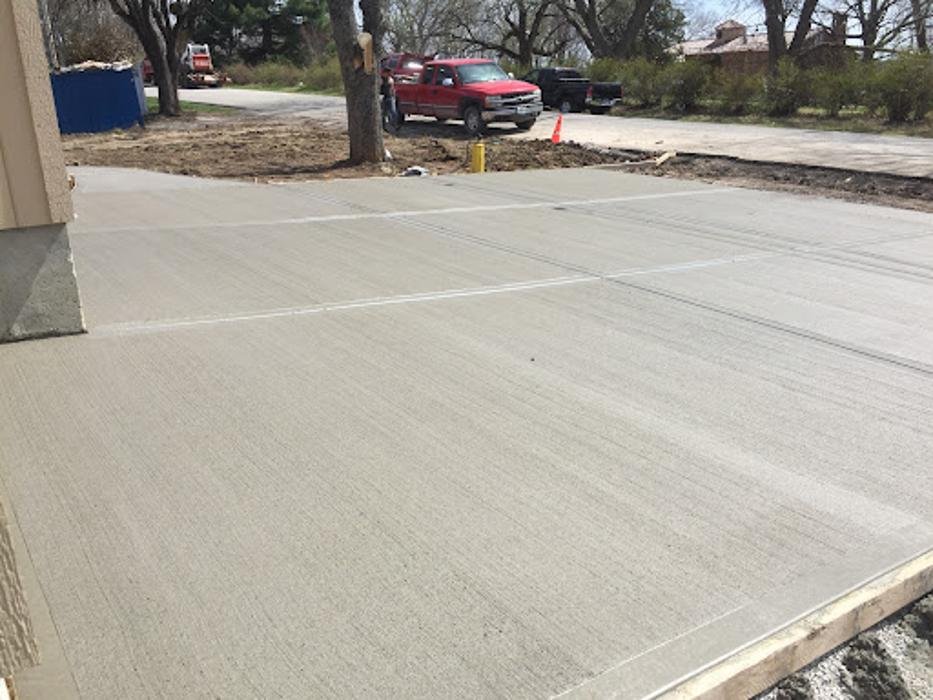
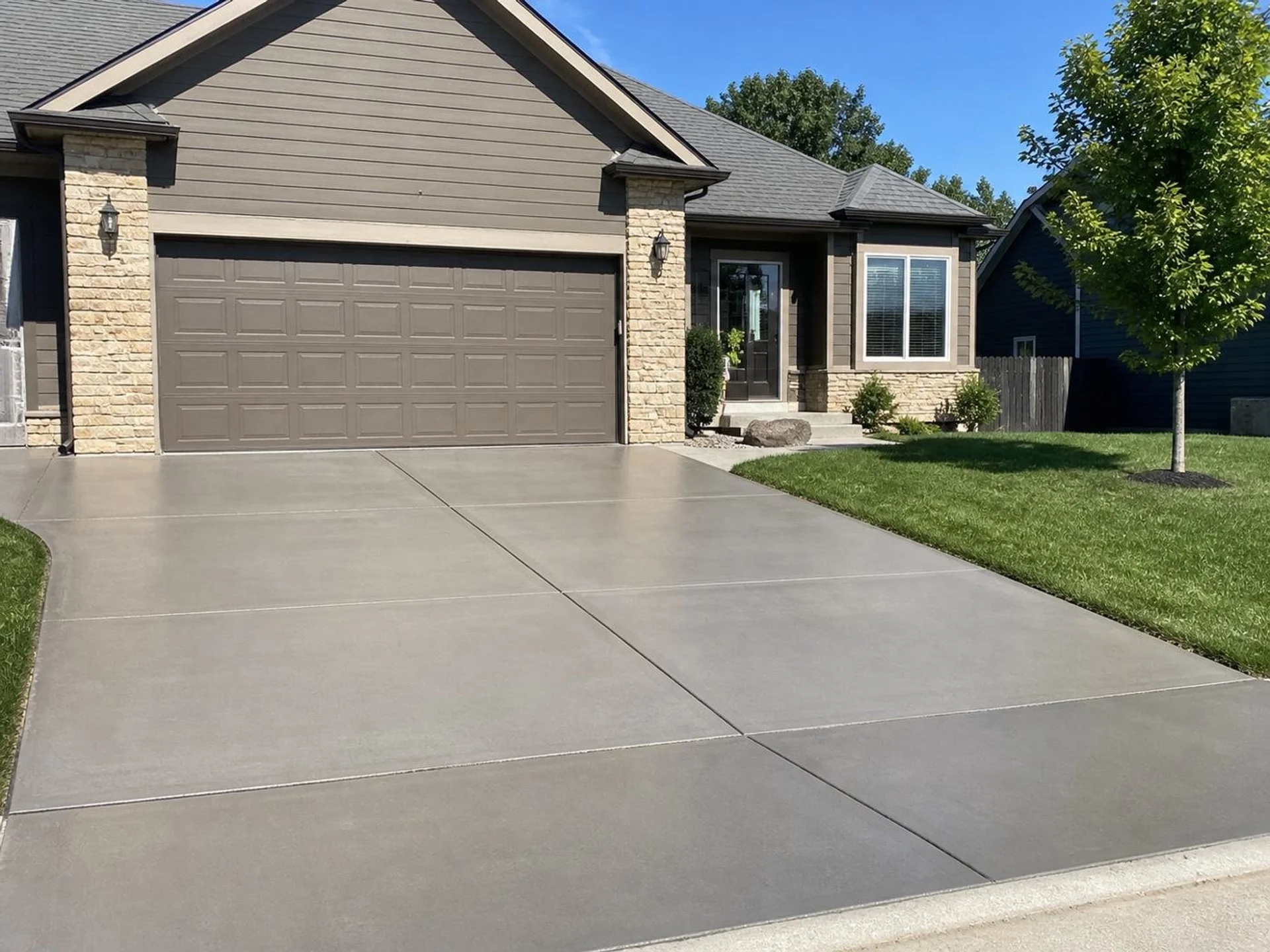
Finished residential concrete driveway with clean control joints at a Grain Valley area home
Grain Valley, MO • I-70 Corridor

Concrete Contractor in Grain Valley, MO — Built for Homes, Businesses, and Eastern KC Growth

Residential driveways and patios to commercial parking lots, warehouse floors, and sitework — specced for eastern KC clay, drainage, and freeze-thaw on every pour.

  • Residential + Commercial Concrete
  • Driveways, Patios, Sitework & Parking Lots
  • Grain Valley + Eastern KC Metro
  • Free Estimates — No Obligation

Get a Free Site Walk

We respond within 24 hours. No commitment required.

Written Estimates 4,000 PSI Minimum I-70 Corridor Specialist Free Site Walks Residential + Commercial

Eastern Kansas City

The I-70 corridor is building fast — and replacing old concrete even faster.

Distribution and logistics operations have expanded aggressively along I-70 east of Kansas City — Amazon, USPS, and third-party logistics facilities have made this one of the most active commercial corridors in Missouri. New home construction is filling subdivisions throughout Grain Valley, Oak Grove, and western Lafayette County. And across Blue Springs, Independence, and the older Grain Valley core, concrete from the 1980s and early '90s is hitting its end-of-life.

The subgrade beneath all of it is predominantly Putnam clay loam — highly expansive, seasonal, and unforgiving of shortcuts in base preparation. We've been building for these conditions long enough to know what fails here, why it fails, and what doesn't.

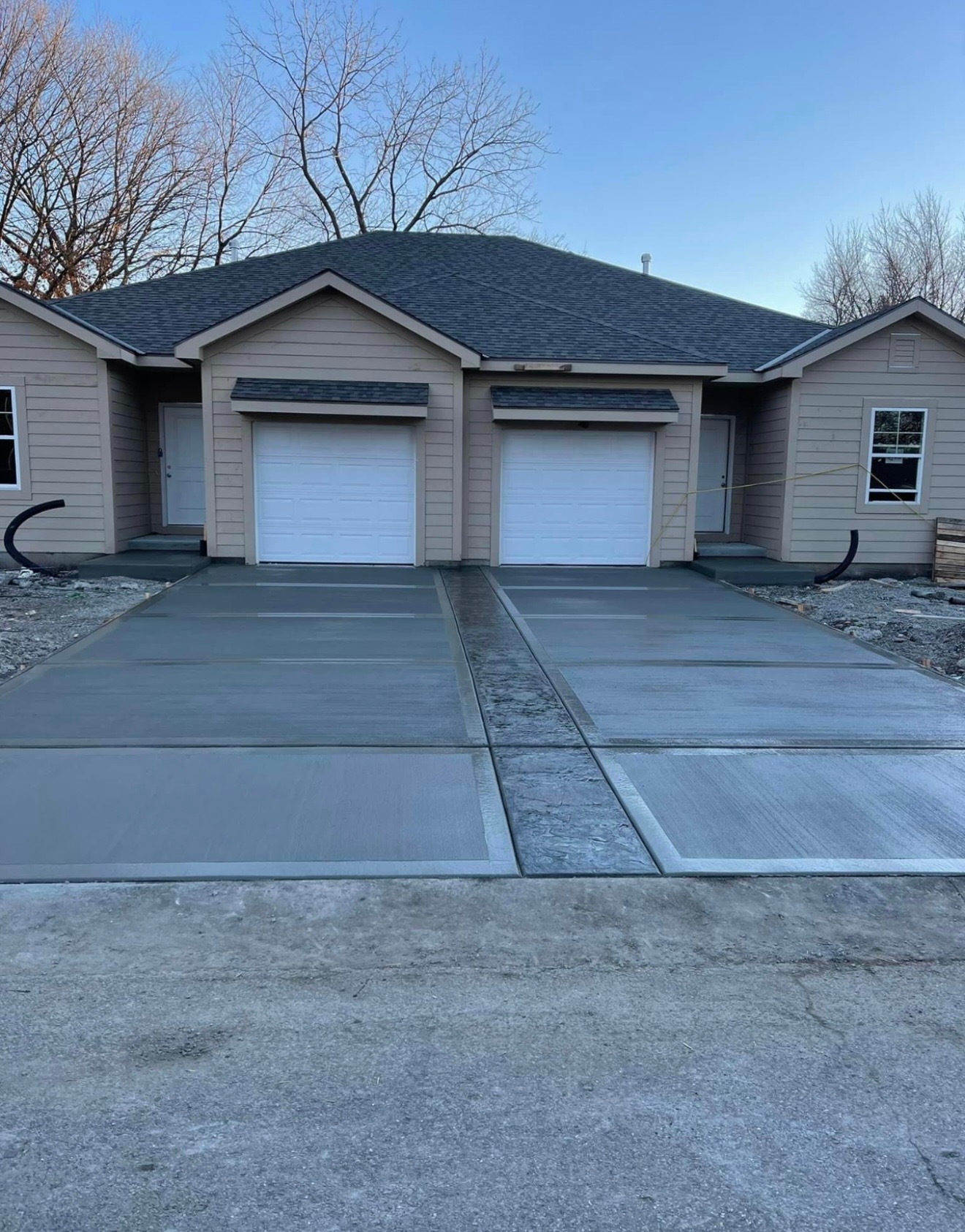
New concrete driveways poured for duplex homes under construction in the Kansas City area

For Homeowners

Residential Concrete in Grain Valley and Eastern KC

Every residential pour is specced for eastern KC clay soil — 4,000 PSI mix, compacted gravel base, drainage slope, control joints at the right intervals.

Concrete driveway installation in the Grain Valley, MO area

Concrete Driveways

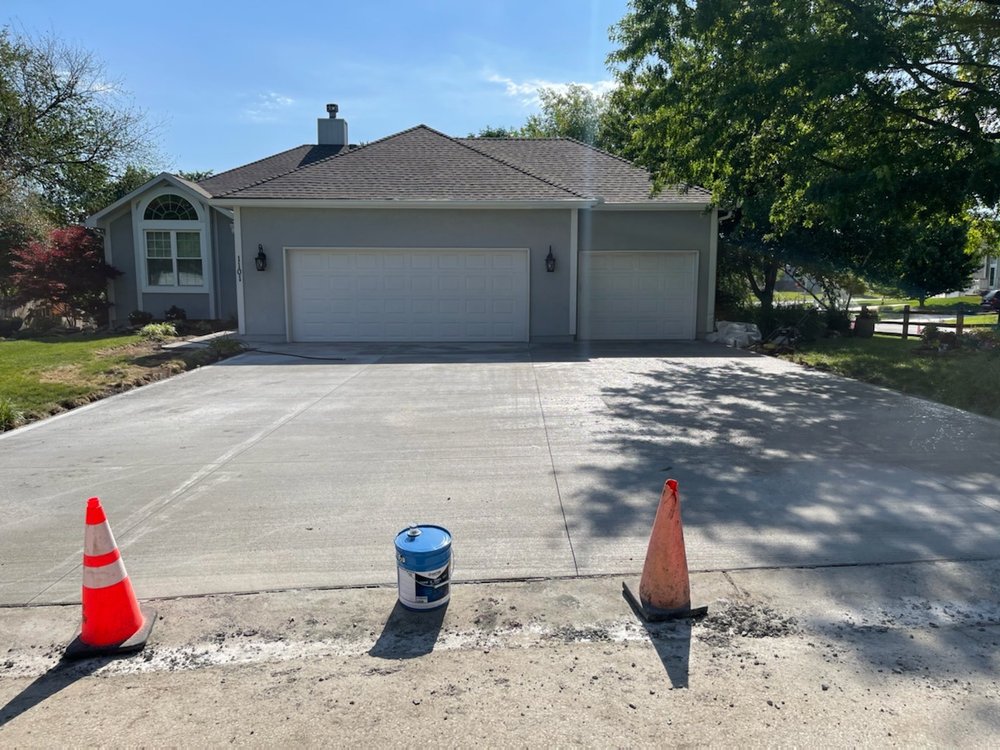
New driveway installation and full replacement for Grain Valley homeowners and properties across the I-70 corridor. Eastern Jackson County's Putnam clay loam expands several inches seasonally — which is why we specify 4–6 inches of compacted gravel base and 4,000 PSI mix on every pour. Control joints at 10–12 foot intervals and proper drainage slope round out a slab built to last 30+ years in eastern KC winters.

Get a Driveway Estimate
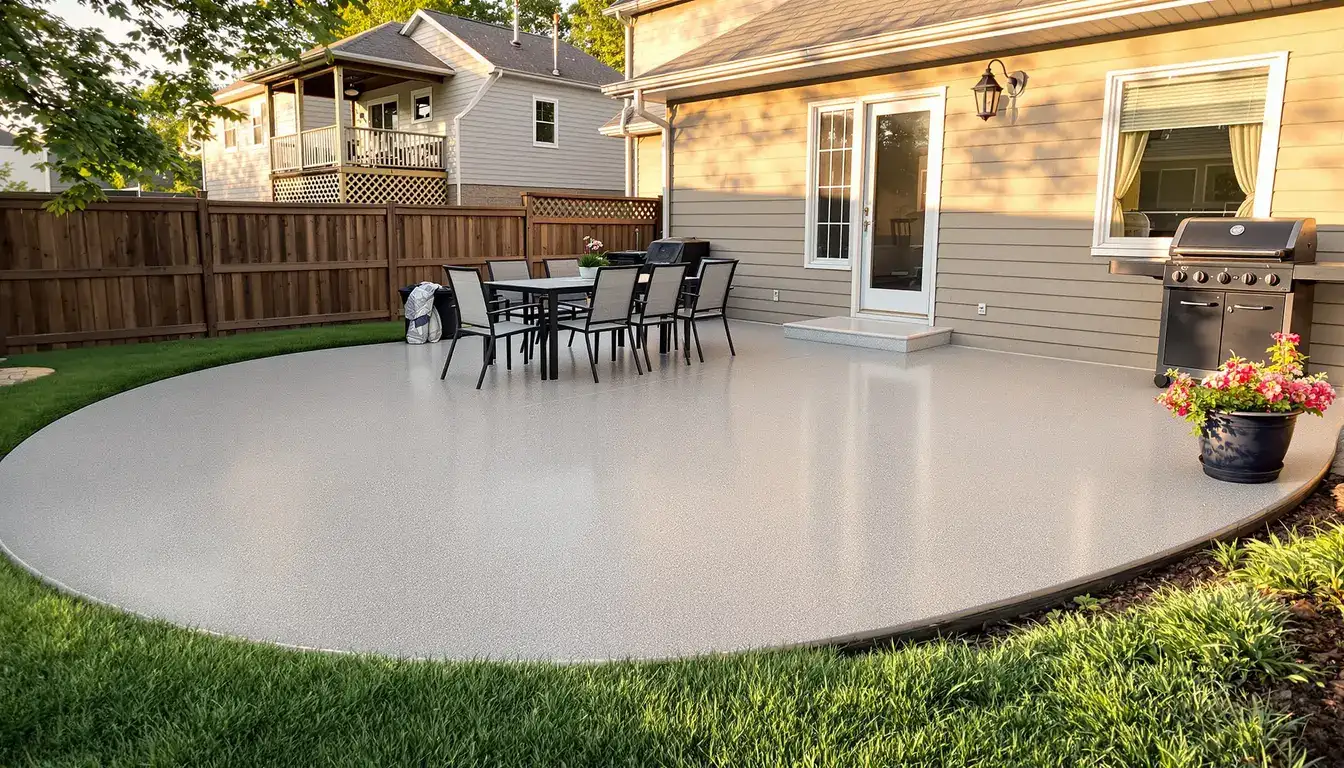
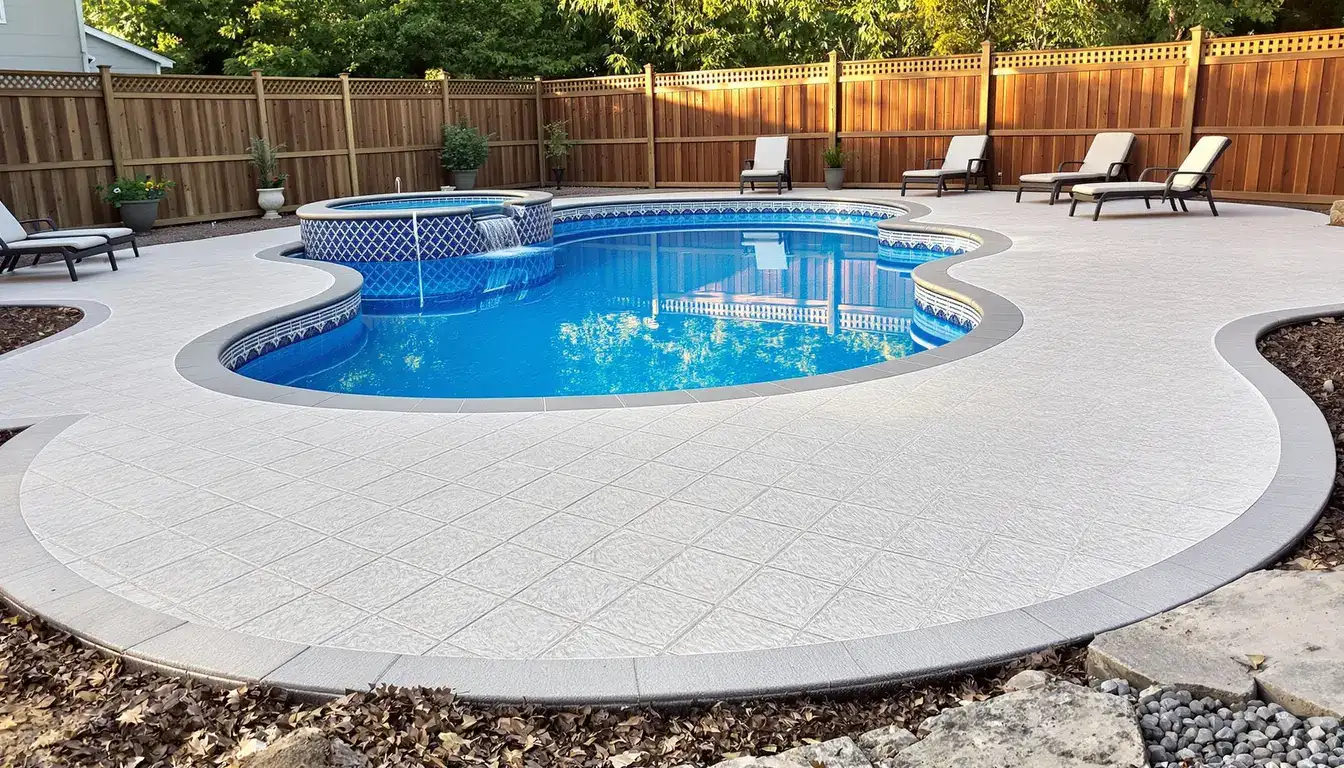
Concrete patio installation at a Kansas City area residential property

Concrete Patios

Patio concrete for outdoor living spaces across Grain Valley, Blue Springs, and the eastern KC suburbs. Clay subgrade movement and 40–60 freeze-thaw cycles per year stress outdoor slabs from below, making base preparation as important as the mix design. We address compaction, drainage slope, and joint placement on every residential pour.

Learn More → Concrete
Stamped concrete pool deck surrounding a residential pool in the Kansas City metro

Pool Decks

Pool deck concrete and pool surround slabs for residential pools in eastern Jackson County. Pool surfaces face year-round moisture exposure that amplifies freeze-thaw damage, so we specify sealer-compatible mix design, saw-cut control joints, and drainage slopes that move water off the slab edge. Broom-finish and stamped options available.

Learn More → Pool
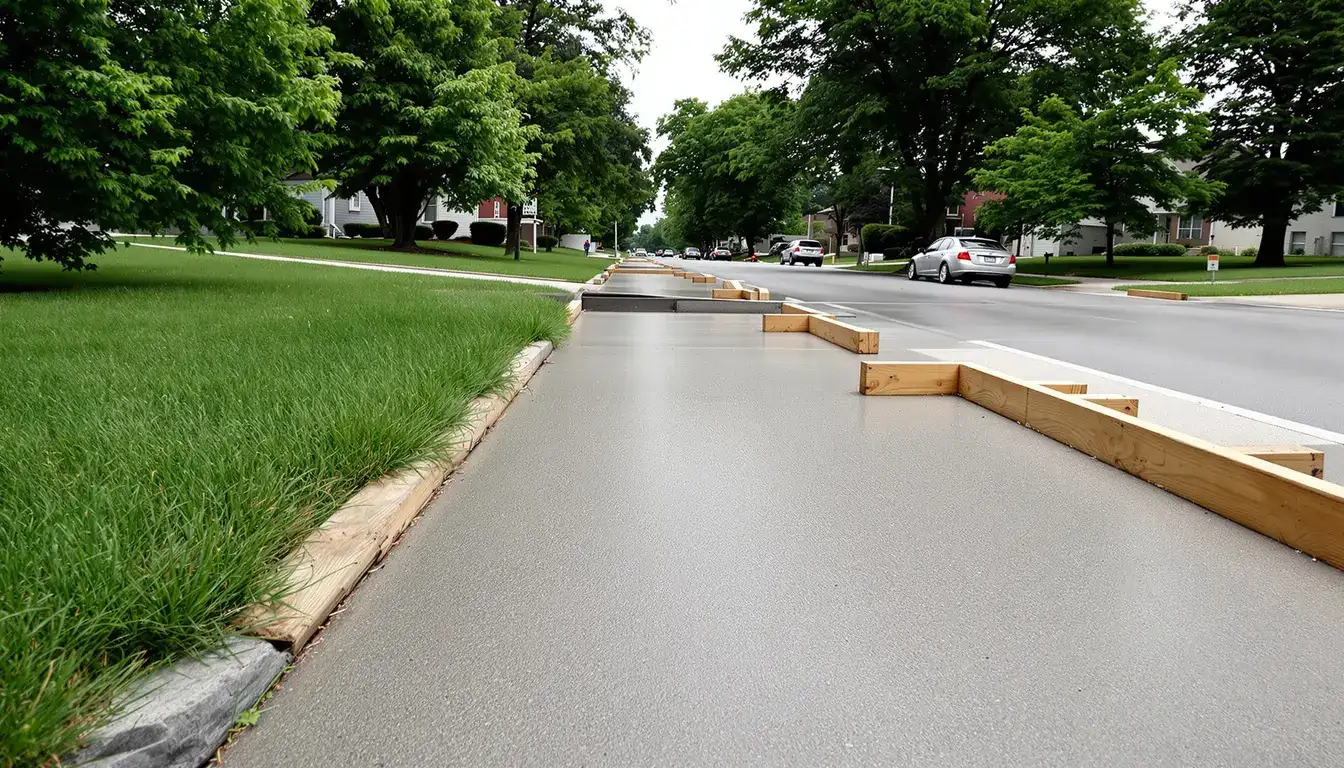
New concrete sidewalk installation along a residential street in the Kansas City area

Sidewalks & Walkways

Sidewalks, front entry walks, and access paths for homes and commercial properties in Grain Valley and eastern KC. Heaving and cracked sidewalks here almost always trace back to clay soil movement from inadequate base prep — we address the cause before the pour. New installation and full replacement including disposal.

Learn More → Sidewalks
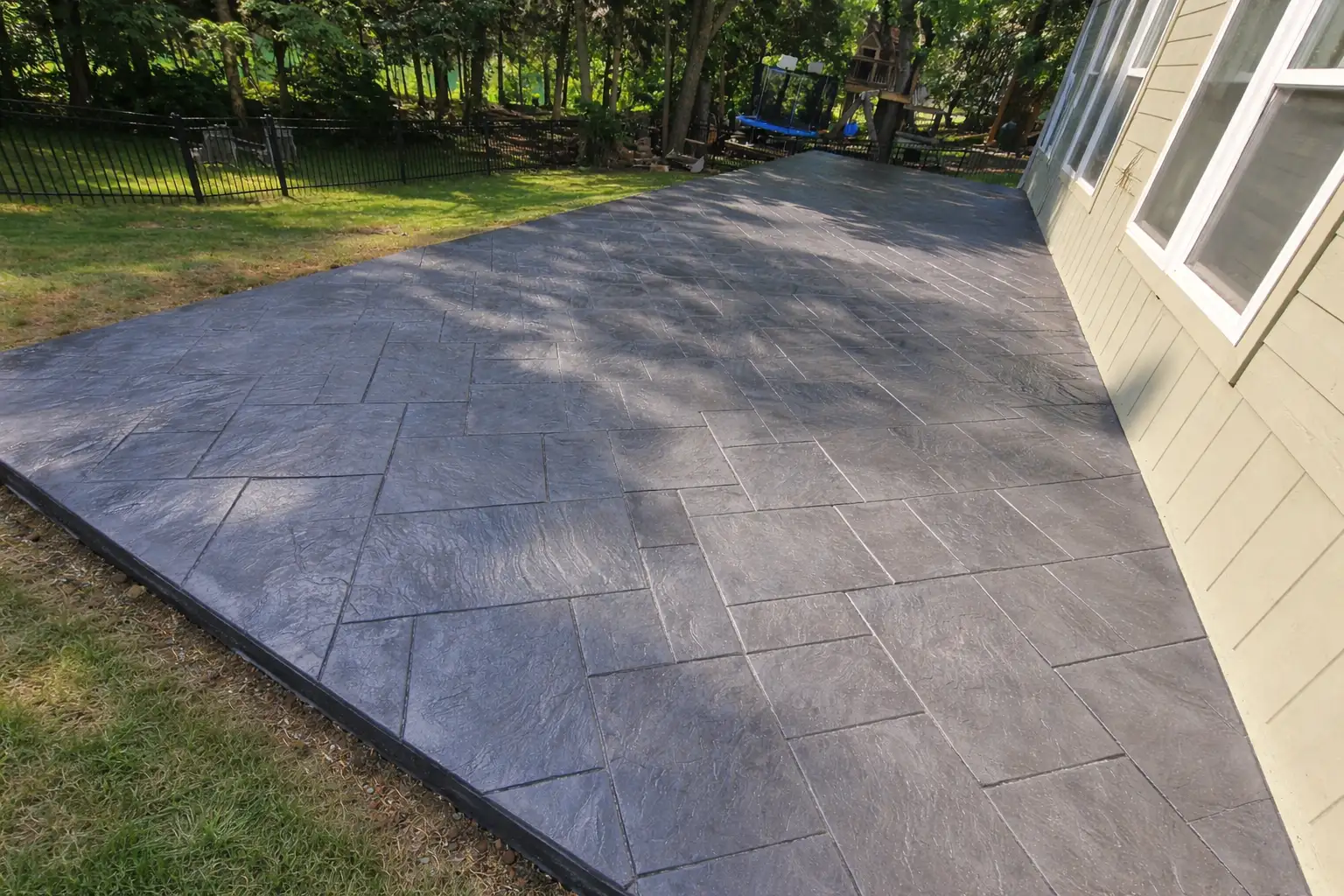
Ashlar slate stamped concrete patio in a Kansas City area backyard

Stamped & Decorative Concrete

Stamped, colored, and decorative concrete for patios, entries, pool decks, and outdoor feature areas. These are real concrete pours with surface treatments during the pour — ashlar slate, herringbone, fan patterns — not overlays applied to existing concrete. We account for eastern KC's freeze-thaw cycling when specifying sealers and joint placement on all decorative work.

Learn More → Stamped
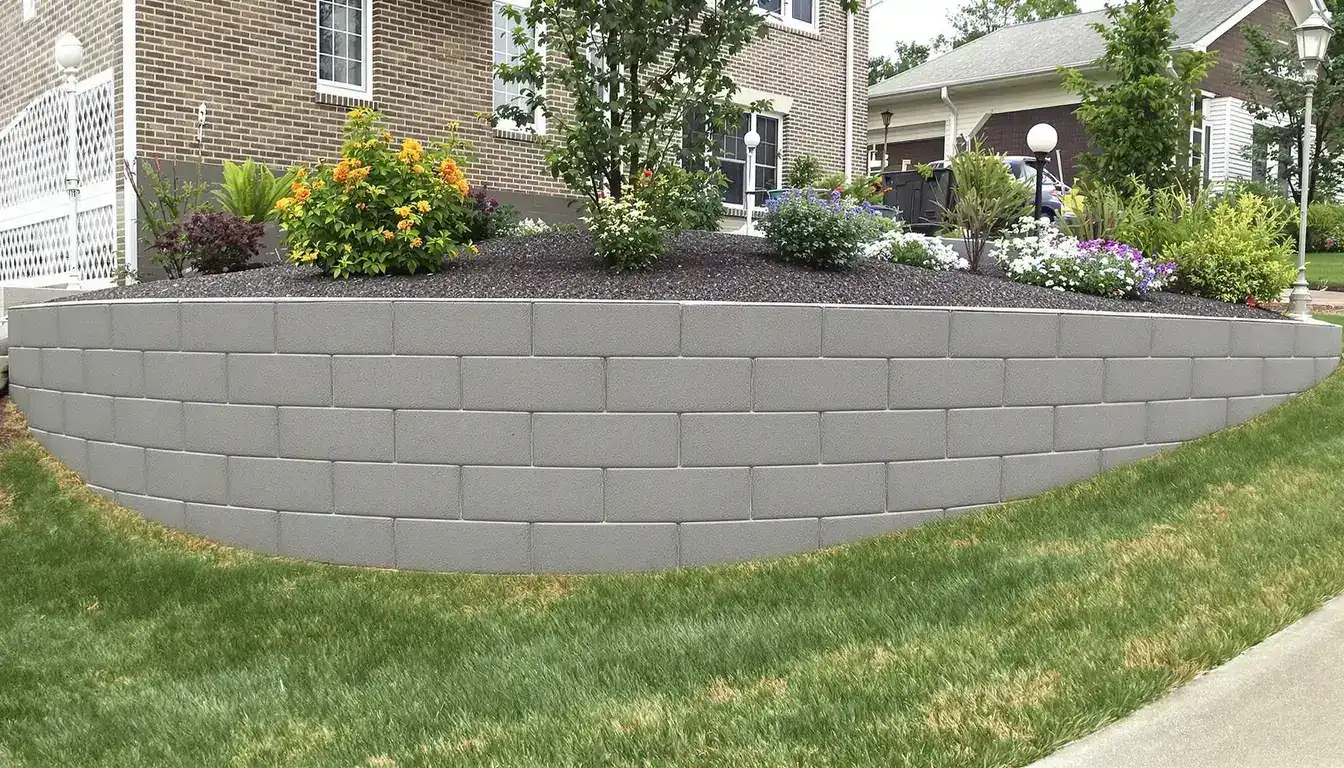
Concrete retaining wall with landscaping at a Kansas City area home

Retaining Walls

Concrete retaining walls for sloped yards, grade changes, patio leveling, and landscape edge definition in eastern Jackson County. Clay soil here is highly expansive — walls need adequate drainage and proper footing depth to resist the hydrostatic pressure that builds up behind poorly-drained retaining walls. We size footings and drainage for the specific conditions on your site.

Learn More → Retaining
Concrete crack repair and resurfacing project in the Kansas City area

Concrete Repair & Replacement

Concrete diagnosis, repair, and full replacement for cracked, settled, or worn slabs across the eastern KC metro. Most concrete failure in this area traces back to inadequate base prep, missing control joints, or drainage problems — we identify the cause before recommending a direction. Honest assessment: repair when the base is sound, replacement when it isn't.

Learn More → Concrete

For Businesses

Commercial Concrete Along the I-70 Corridor

Parking lots, warehouse floors, foundations, sitework, ADA access, curbs, and gutters for commercial properties across eastern Jackson County.

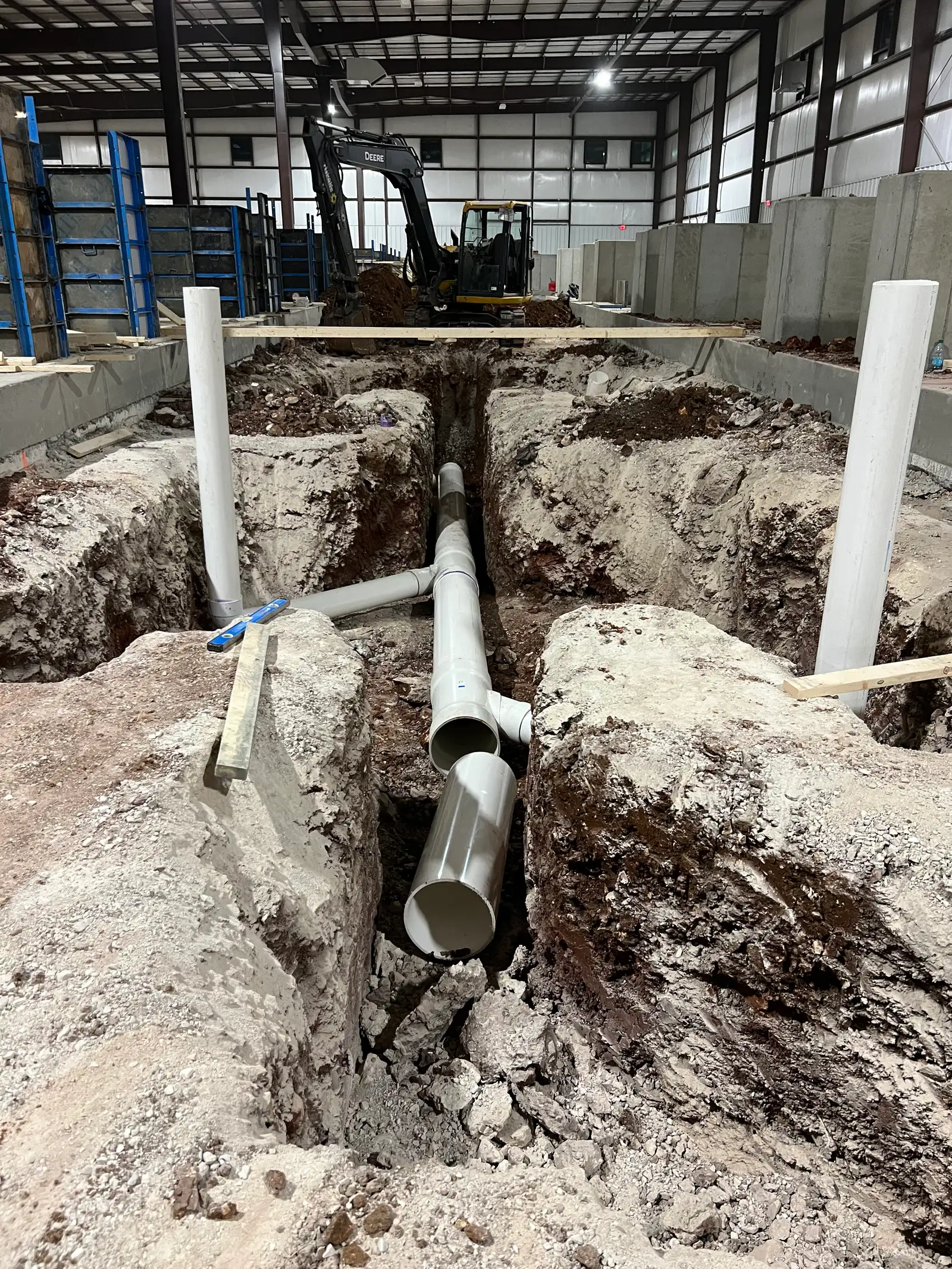
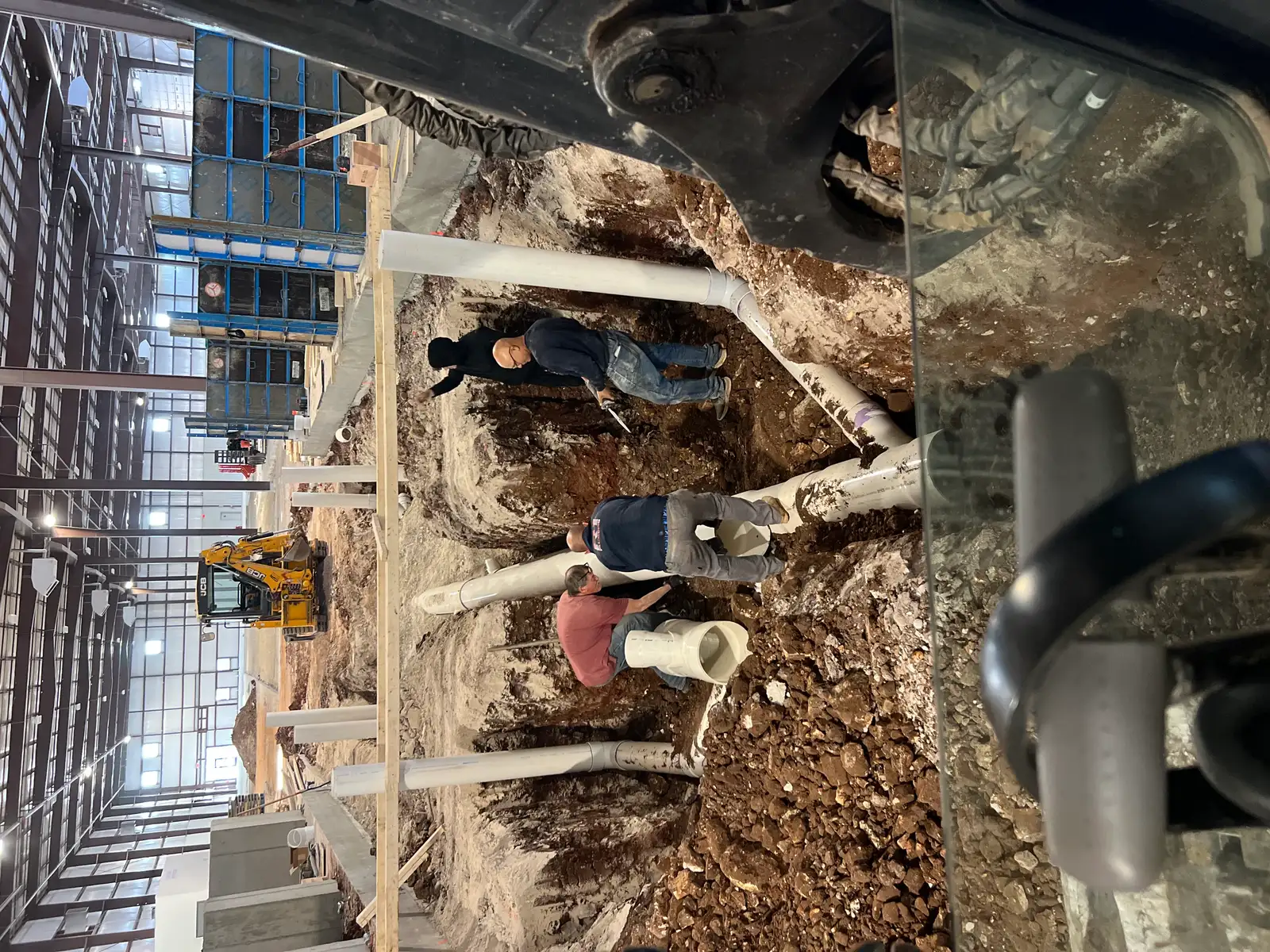
Commercial concrete foundation preparation inside a Kansas City warehouse building
Commercial

Foundations & Sitework

Foundation slabs, grade beams, and commercial sitework for construction and expansion projects along the I-70 corridor. Eastern Jackson County's clay soil requires careful subgrade preparation — improper compaction can cause differential settlement that damages the entire structure. We work with builders, developers, and property owners on both new construction and expansion scopes.

Request Commercial Bid
Freshly poured commercial concrete parking pad in the Kansas City area
Commercial

Parking Lots

Commercial parking lot concrete for businesses along I-70 and across eastern Jackson County. Concrete parking lots outlast asphalt in eastern KC's freeze-thaw climate — typically 30–50 years versus 10–15 for asphalt — when specced and installed correctly. Full scope from demolition through final surface and joint sealing.

Request Commercial Bid
Industrial concrete floor installation inside a Kansas City area warehouse
Commercial

Warehouse & Industrial Floors

Industrial and warehouse concrete floors for distribution, logistics, and light manufacturing facilities along the I-70 corridor east of Kansas City. Forklift and pallet jack traffic demands flat, properly-cured floors with adequate slab thickness and rebar — we pour to industry flatness standards with fiber reinforcement or rebar as required. Distribution corridor experience means we understand the operational timelines.

Request Commercial Bid
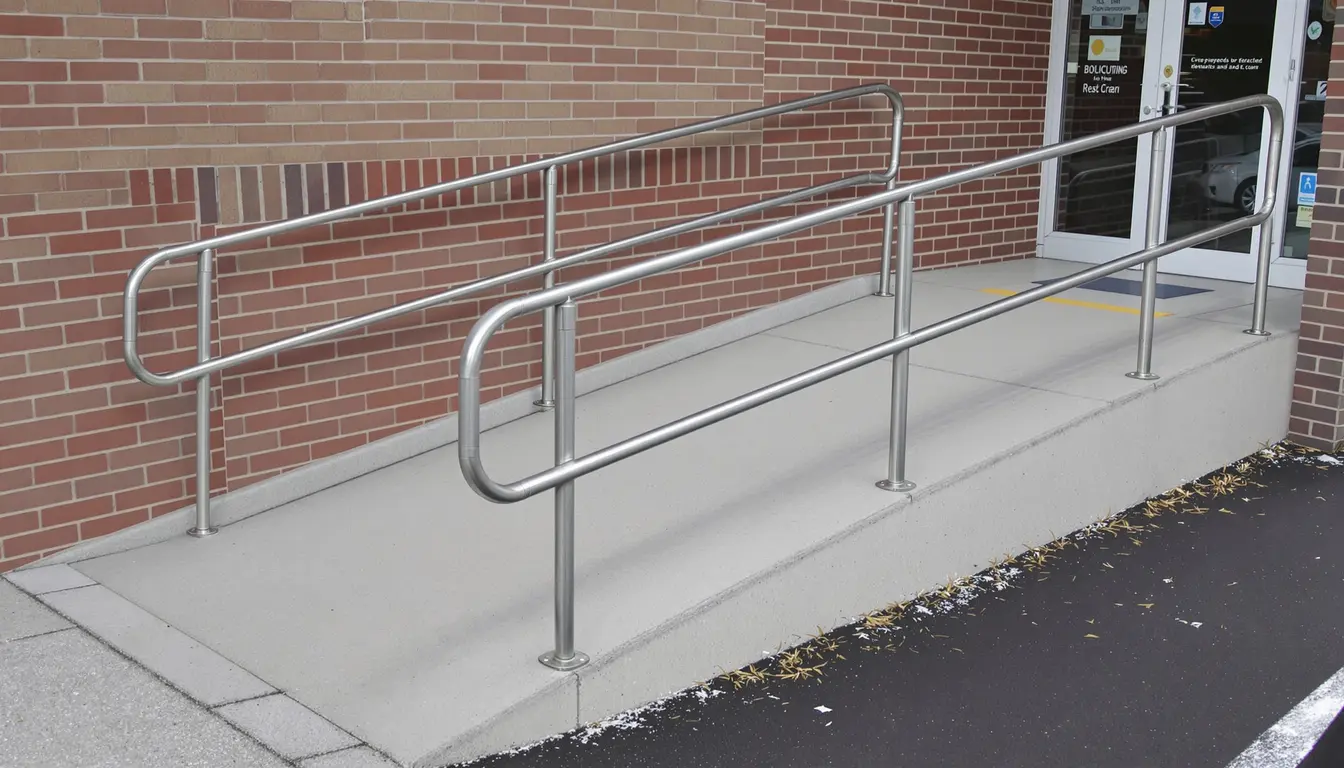
ADA-compliant concrete access ramp with steel handrails at a commercial building
Commercial

ADA Concrete

ADA-compliant ramps, accessible walks, curb cuts, and accessible routes for commercial properties in eastern Jackson County. ADA concrete requires specific slope tolerances — 2% maximum cross-slope, 8.33% maximum running slope — detectable warning surfaces at curb transitions, and smooth texture, each verified at installation. We document slope measurements on every ADA project.

Request Commercial Bid
Concrete curb and gutter installation at a Kansas City area commercial property
Commercial

Curbs & Gutters

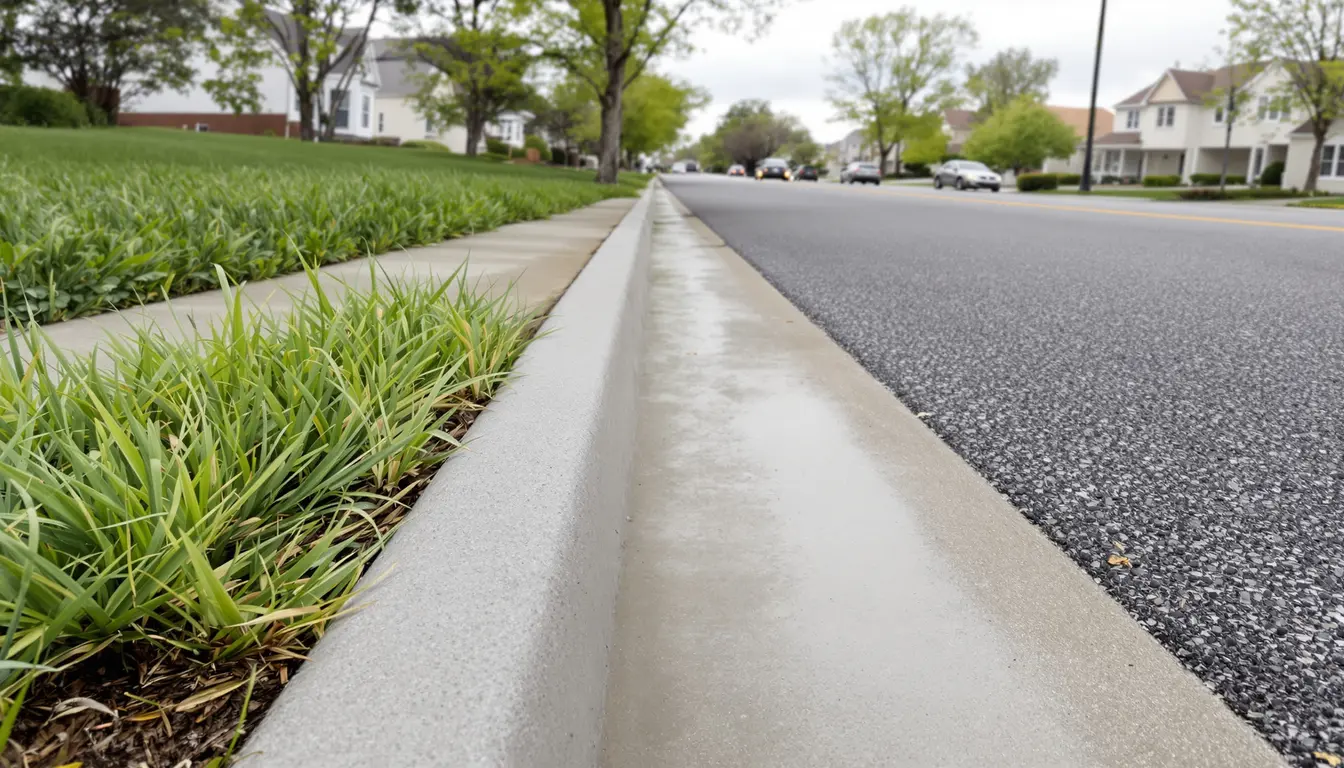
Curbs, gutters, drainage edges, and parking lot boundaries for commercial properties and site development along the I-70 corridor. Curb and gutter work on clay subgrade requires attention to drainage — poor slope or inadequate subgrade compaction leads to cracking and undermining at the curb base. Formed or slipform installation depending on scope.

Request Commercial Bid

Eastern Jackson County

Clay Soil, Drainage, Freeze-Thaw — What You're Actually Working With

Concrete in eastern Kansas City fails for specific, diagnosable reasons. The conditions here are more demanding than most of the metro — and the ones that matter most are below the surface.

3–5" seasonal vertical movement

Putnam Clay Loam — Missouri's Most Expansive Subsoil

Eastern Jackson County's native soil is primarily Putnam clay loam — among Missouri's most expansive soil types. It swells significantly when saturated and contracts sharply when dry. That seasonal vertical movement is the primary driver of concrete cracking and slab settlement in this area, and it's why we specify 4–6 inches of compacted gravel base on residential driveways. The gravel base insulates the slab from subgrade movement that would otherwise crack it within a few seasons.

1–2% minimum drainage slope

Drainage Determines How Long Your Concrete Lasts

Water sitting against or underneath concrete accelerates failure faster than any other factor in this climate. We set drainage slopes at installation — concrete should drain away from structures at 1–2% minimum. On sloped I-70 corridor sites, we design runoff paths so water doesn't concentrate along slab edges or against foundations. If a pre-existing drainage problem is present, we flag it at the estimate — pouring new concrete over a drainage failure doesn't fix the underlying problem, it just hides it until the new slab starts failing.

4,000 PSI minimum — no exceptions

40–60 Freeze-Thaw Cycles Every Winter

The KC metro cycles through 40 to 60 freeze-thaw events per year. Each cycle stresses concrete and expands any moisture that's worked into the slab through cracks, unsealed edges, or poor drainage. Defense: 4,000 PSI or better mix design, control joints at 10–12 foot intervals on driveways, sealed joint edges, and adequate drainage. We don't downgrade the mix spec to win a bid — the PSI difference is small in material cost and significant in slab longevity over 20–30 years.

24" Missouri design frost depth

Repair vs. Replacement — A Straight Answer

Repair makes sense when the slab is intact, in position, and the base beneath is sound. Replacement is right when slabs have settled significantly, the base has failed, drainage has been compromised, or repair costs approach replacement cost. We tell you which direction makes sense at the site visit — not after we've already started tearing concrete out. Most contractors can give you a price. Fewer can tell you why the concrete failed in the first place, which is the only way to make sure the new pour doesn't repeat the same failure.

How We Work

What Separates a Contractor Who Knows This Corridor

Four things that matter when you're working on Putnam clay loam with 40–60 freeze-thaw cycles a year.

We Diagnose Before We Quote

We visit the site before giving you a number. We look at the subgrade, check drainage patterns, assess base condition on replacements, and identify what failed and why. A quote without a site visit is a guess. Ours aren't.

Written Quotes With Line Items

You get a specific, itemized written scope — not a single padded number. Materials, base depth, slab thickness, rebar spec, drainage slope, joint placement. You know exactly what you're getting before any work starts.

Pour Day Means Pour Day

Concrete work has a hard schedule — batch plants, forming crews, weather windows. We show up when we said we would. Clients along the I-70 corridor don't have time for a contractor who calls the morning of to reschedule.

Built for Eastern KC — Every Time

4,000 PSI minimum. Proper base depth for Putnam clay. Drainage slope on every pour. Control joints at correct intervals. These aren't upsells — they're what concrete in this specific market requires to last. We build to spec regardless of project size.

What to Expect

From First Call to Finished Concrete

A predictable process with no surprises.

Step 01

Request an Estimate

Call or fill out the form above. We'll discuss your project, timeline, and property — then schedule a site visit at no cost.

Step 02

Site Walk & Diagnosis

We visit the site, assess the subgrade and drainage, check base condition on replacements, take measurements, and identify anything that affects the spec or the price.

Step 03

Written Scope & Quote

You get a specific, itemized written scope — not a single number. Materials, base depth, thickness, rebar, joint placement, drainage slope. All of it.

Step 04

Prep, Form, Pour, Finish

Site preparation, formwork, the pour, finishing to the specified texture, and control joint cutting. Permits pulled in advance if needed.

Step 05

Final Walkthrough

We walk the completed project with you before we leave. Curing schedule provided — you'll know exactly when the concrete is ready for full use.

Google Reviews

See what Grain Valley and eastern KC customers say.

Reviews are on our Google Business Profile — read them there, directly from the people who hired us.

Where We Work

Eastern KC Metro Service Area

Eastern Jackson County and into Lafayette County along the I-70 corridor — 7 cities served.

Not sure if you're in range? Call (816) 542-6124 — most eastern KC projects fall within our standard service footprint.

Common Questions

Concrete Questions from the I-70 Corridor

Straight answers about soil conditions, frost depth, mix spec, and when to repair versus replace.

What makes concrete work along the I-70 corridor different from other parts of KC?

The I-70 corridor east of Blue Springs and Grain Valley has a specific set of compounding conditions: Putnam clay loam subsoil that ranks among Missouri's most expansive, 40–60 freeze-thaw cycles per year, and — in commercial areas — constant ground vibration from logistics and distribution traffic concentrated on this route. Clay soil expands significantly when wet and contracts when dry, creating several inches of vertical movement per season. That seasonal ground movement is the primary driver of concrete cracking and slab settlement here, and it's why we build base preparation, drainage, and control joint placement differently than contractors working in sandy-soil markets or in parts of KC with more forgiving subgrade conditions.

How does Grain Valley's soil type affect base preparation for a concrete driveway?

Eastern Jackson County is predominantly Putnam clay loam — a highly expansive soil that can swell dramatically with moisture and contract sharply as it dries. On residential driveways, we typically specify 4–6 inches of compacted gravel base, deeper on any section showing poor drainage or soft subgrade. The gravel base gives the slab a stable platform that doesn't shift with seasonal clay movement. Skimping on base depth is the single most common reason we're called out to replace 10-year-old driveways that should have lasted 35. We also verify compaction with a plate compactor — not just visual inspection — before we pour.

What frost depth do you design for in eastern Jackson County?

Missouri's design frost depth for this region is 24 inches. That depth directly informs our footing and foundation work, but it also shapes how we think about drainage under flatwork. Any water trapped below or against a slab at that depth freezes and expands, creating upward pressure that heaves and cracks the concrete. Proper drainage slopes at installation, sealed joint edges, and adequate base depth minimize moisture accumulation under the slab. On residential flatwork we don't go 24 inches deep, but we do address compaction, drainage, and edge sealing to limit how much moisture can work its way underneath.

When does a concrete driveway or patio need replacement rather than repair?

Repair makes sense when the slab is structurally intact, still in its original position, and the base beneath it is sound. The damage is surface-level or localized — minor cracking, staining, or a single settled section. Replacement is the right call when slabs have moved significantly out of position, the base has been compromised or washed out, drainage has been compromised from the start, or when the cost to repair adequately approaches what replacement would cost. In most cases we can tell you which direction makes sense on the site visit before we quote anything — and we don't push replacement unless it genuinely makes more sense than repair.

What PSI concrete do you specify for driveways and patios in Kansas City?

We use 4,000 PSI or better for all outdoor flatwork — driveways, patios, pool decks, sidewalks. Some contractors pour at 3,000 PSI to cut material cost; that spec is fine for interior slabs in controlled environments, but outdoor concrete in eastern KC's freeze-thaw climate needs the higher strength to resist surface deterioration and internal cracking from ice expansion. The difference in material cost on a residential driveway is modest. The difference in slab longevity is measurable over 10–20 years, particularly in winters with heavy deicer use.

Do you work on new subdivision construction in Grain Valley's newer neighborhoods?

Yes. The I-70 corridor east of the city has seen consistent new home construction over the past 15 years — Grain Valley, Oak Grove, and surrounding communities are adding subdivisions on what was recently agricultural land. New construction concrete is a significant part of our residential work: first driveways on new homes, patios for recently built properties, walkway systems for new developments. Getting the spec right on the first pour is the whole game — base depth, drainage slope, mix design, and joint placement all matter far more at installation than they do as retrofit repairs.

How do you handle drainage on sloped sites along the I-70 corridor?

Sloped sites are common in this area — the I-70 corridor runs through terrain that transitions from Missouri River bottomland to upland prairie, with creek drainages cutting across eastern Jackson County. On sloped residential sites, we set concrete drainage slopes at 1–2% minimum away from structures, and we design surface runoff so it doesn't concentrate along slab edges or against footings. On commercial sites, we coordinate with the overall grading and storm drainage plan. If a site has a pre-existing drainage problem — standing water, erosion patterns, chronic wet subgrade — we flag it at the estimate stage. Pouring concrete over a drainage problem doesn't fix the problem; it just hides it until the concrete starts failing.

What does a 'site walk' include before you give a quote?

A site walk is a real assessment — not a tape measure visit followed by a number. We look at the existing surface or subgrade, check for drainage patterns that need to be addressed, evaluate the base condition on replacement projects, identify any issues that would affect the spec (tree roots, utility conflicts, poor subgrade, drainage concerns), and take measurements. On replacement jobs we try to identify why the existing concrete failed, because pouring new concrete over the same conditions produces the same failure. The site walk is free and there's no obligation — it just means the number we give you is based on what's actually there, not on what you described over the phone.

Get Started

Ready to start your concrete project in Grain Valley?

Free estimates for residential and commercial concrete across the eastern KC metro. We visit the site, review the conditions, and give you a written quote — no cost, no obligation.

Grain Valley, MO • Eastern Kansas City Metro • 7 Service Areas

(816) 542-6124 Free Estimate